
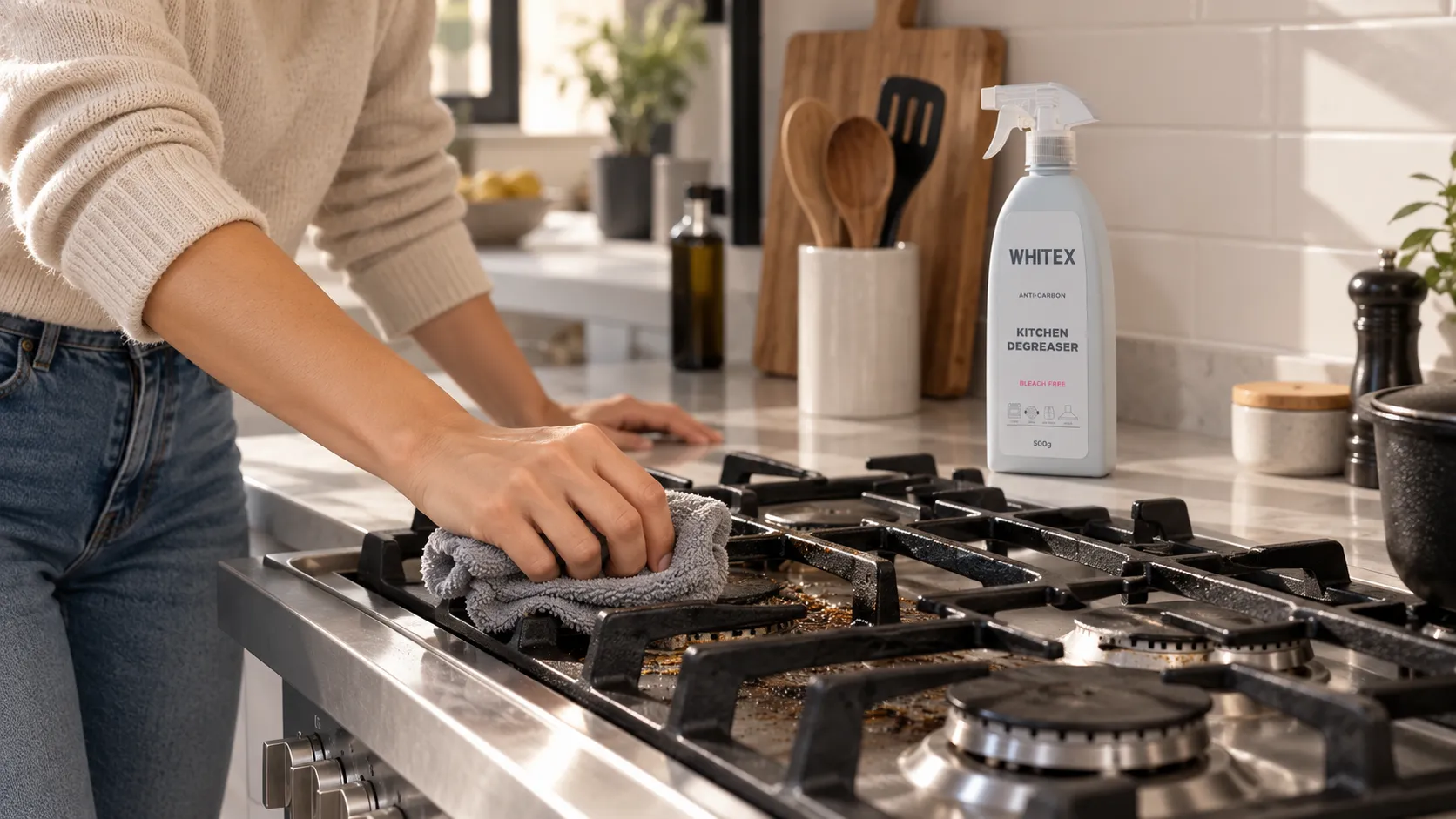
Cast-iron stove grates are an essential part of the cooktop, but they can also be one of the most challenging areas of the kitchen to clean. If you’ve ever dealt with burnt-on stains, layers of grease, and black carbon buildup on your stove grates, you already know that getting them clean isn’t always easy. The good news is that with the right method and a suitable cleaning product such as Whitex Kitchen Degreaser, you can make the job faster and achieve better results with less effort. In this guide, we’ll explain the best way to clean cast-iron stove grates, how to remove stubborn carbon buildup, and which common cleaning mistakes you should avoid.
Why Is It Important to Clean Cast-Iron Stove Grates?
Because stove grates are constantly exposed to heat, grease, spills, and food residue, dirt can quickly build up on their surfaces. If this buildup isn’t removed regularly, it can lead to: Thick layers of burnt-on grease and carbon, Unpleasant odors while cooking, A dirty, worn appearance, Buildup around the cooking area that becomes, increasingly difficult to remove. Keeping your stove grates clean is therefore not just about appearance. Regular cleaning also helps keep your cooktop in better condition and prevents stubborn residue from accumulating over time.
How Does Carbon Buildup Form on Stove Grates?
Carbon buildup is essentially layers of grease and food residue that have been repeatedly exposed to high temperatures and burned onto the surface. Over time, these layers become harder and more compact, making them extremely difficult to remove with water alone. A common mistake is waiting until the buildup becomes thick before cleaning it. Regular cleaning can prevent grease and burnt-on residue from becoming heavily embedded. Using a specialized product such as Whitex Kitchen Degreaser can also make stubborn buildup much easier to tackle.
The Best Way to Clean Cast-Iron Stove Grates
Here’s a simple step-by-step method for cleaning your stove grates effectively. 1. Remove the Grates from the Stove First, turn off the stove and wait until the grates are completely cool. Once cooled, carefully remove them from the cooktop. Never attempt to clean hot stove grates. 2. Soak Them First if There Is Heavy Grease Buildup If the grates are heavily coated with grease, soaking them in warm water for 15–20 minutes can help soften surface residue and make the next steps easier. Before soaking, check your stove manufacturer’s care instructions, as prolonged soaking may not be recommended for every type of coated or cast-iron grate. 3. Apply Whitex Kitchen Degreaser Apply Whitex Kitchen Degreaser evenly to the areas with grease and burnt-on buildup. Its specialized formula is designed to tackle stubborn grease and carbonized residue, helping loosen difficult deposits and making them easier to remove from compatible stove surfaces. Allow the product to work for approximately 5–10 minutes, or follow the contact time specified on the product label for best results. 4. Scrub with a Suitable Brush or Scouring Pad Use a suitable cleaning brush or non-damaging scouring pad to scrub the surface. Pay particular attention to areas where grease and carbon have accumulated. Once the cleaner has had time to work, stubborn residue should be easier to loosen and remove. 5. Rinse and Dry Thoroughly Once the grates are clean, rinse them thoroughly as directed and dry them completely before placing them back on the stove. Proper drying is particularly important for cast iron, as leaving moisture on the surface may contribute to rust.
Should You Use Steel Wool on Cast-Iron Stove Grates?
Steel wool might seem like a quick solution for stubborn buildup, but aggressive scrubbing can cause problems, particularly on coated grates. It may: Damage the surface coating Leave scratches Increase the risk of corrosion over time Instead of relying on highly abrasive cleaning methods, using a specialized product such as Whitex Kitchen Degreaser with a suitable brush or cleaning pad can make it easier to remove stubborn grease without unnecessary scrubbing. Always check the stove manufacturer’s instructions before using abrasive tools.
Home Remedies for Cleaning Stove Grates—and Their Limitations
Several household cleaning methods are commonly used for stove grates, including: Baking soda and vinegar Dishwashing liquid Hot water and salt These methods may work well for light, fresh residue, but they often require more time and effort when dealing with thick layers of burnt-on grease or carbon buildup. For tougher cleaning jobs, a specialized degreaser can provide a faster and more convenient solution.
How Often Should You Clean Stove Grates?
Regular cleaning is one of the easiest ways to prevent thick layers of carbon and grease from forming. As a general cleaning routine: Wipe away surface dirt and grease about once a week. Give the grates a deeper clean about once a month. Clean up food spills as soon as the stove has cooled. The exact frequency will depend on how often you cook and how quickly grease and residue build up. Keeping up with regular cleaning makes deep cleaning much easier later on.
Common Mistakes When Cleaning Cast-Iron Stove Grates
Avoid these common mistakes when cleaning your stove grates: Putting hot grates into cold water: Sudden temperature changes may damage some materials or finishes. Using unsuitable strong acids: Harsh products may damage the surface or protective coating. Leaving the grates wet: Remaining moisture can increase the risk of rust. Frequently using highly abrasive steel wool: Excessive abrasion may scratch or damage the finish. Following the correct cleaning method can help keep your stove grates in better condition for longer.
Why Choose Whitex Kitchen Degreaser?
Whitex Kitchen Degreaser is a practical choice for tackling some of the toughest cleaning jobs around the stove. Key benefits include: Powerful action against burnt-on grease Helps remove tough carbonized residue Fast and effective cleaning Easy, ready-to-use application Suitable for compatible stove and kitchen surfaces Helps reduce the time and effort needed for heavy-duty cleaning For kitchens where grease and burnt-on residue are a regular challenge, keeping a specialized degreaser on hand can make routine cleaning much easier.
A Useful Tip for Preventing Carbon Buildup
The best way to prevent stubborn carbon buildup is to remove spills and grease regularly rather than allowing them to burn onto the surface repeatedly. After cooking, wait until the stove and grates have cooled completely, then wipe away fresh spills and grease as soon as possible. Regular maintenance reduces the amount of heavy scrubbing needed later and helps keep the grates looking cleaner for longer.
Conclusion
Cleaning cast-iron stove grates becomes much more difficult when grease and carbon buildup are allowed to accumulate over time. A regular cleaning routine, combined with a suitable product such as Whitex Kitchen Degreaser, can make it much easier to remove burnt-on grease and stubborn residue. Remember: Regular cleaning helps prevent stubborn carbon buildup. Using a specialized cleaner makes tough grease easier to remove. Thorough drying helps protect cast iron from rust. By dealing with spills and grease regularly and using the right cleaning method, you can keep your stove grates clean and well maintained with much less effort.
Burnt-on grease and carbon buildup can make cast-iron stove grates difficult to clean. This guide explains how to clean stove grates properly, prevent stubborn buildup, avoid common cleaning mistakes, and use Whitex Kitchen Degreaser to tackle tough grease and burnt-on residue.